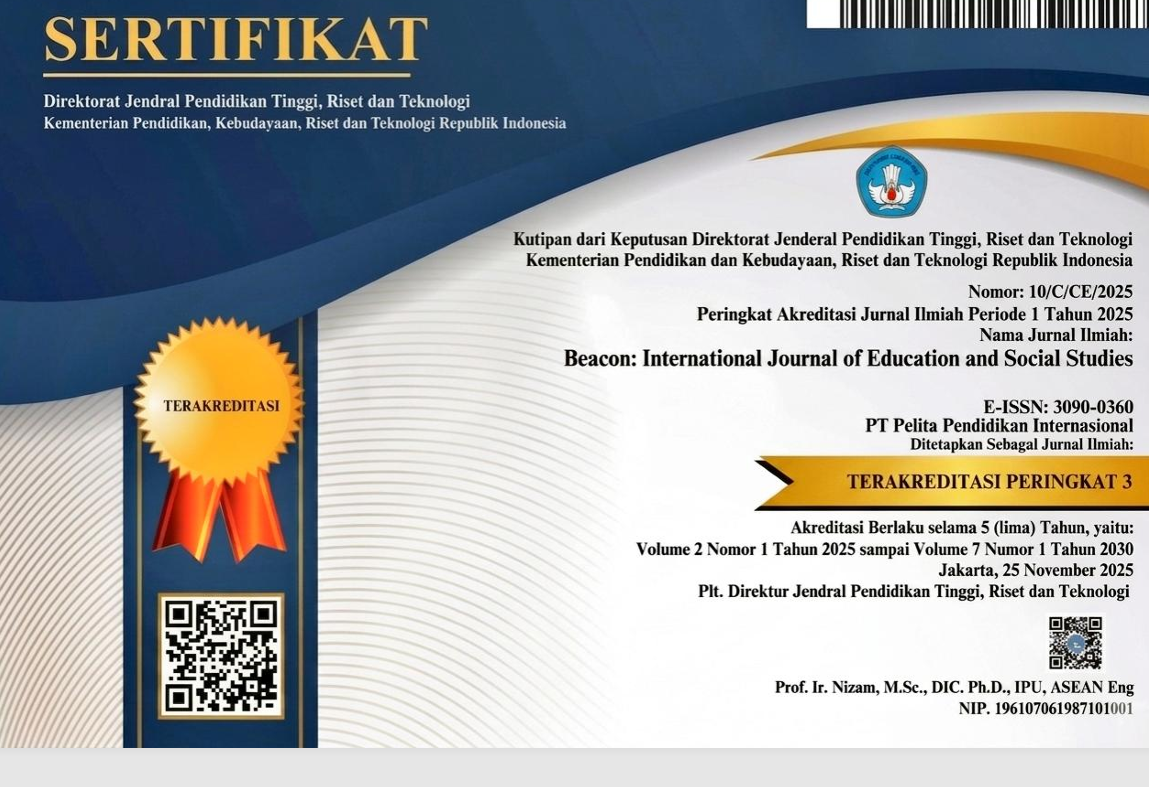
Assessing the Impact of the Case Study Method on Management Education Outcomes
Keywords:
Case Study Method; Management Education; Learning Outcomes; Decision-Making Competency; Mixed MethodsAbstract
This study examines the impact of the Case Study Method (CSM) on management education outcomes, particularly managerial decision-making competency, critical thinking, student engagement, and employability. Using a sequential explanatory mixed-methods design, quantitative data were collected through surveys from students, faculty members, and recruiters across multiple institutions, and complemented by qualitative interviews to deepen interpretation of the findings. The results indicate that CSM has a significant positive effect on all measured outcomes, with the strongest influence observed in managerial decision-making competency. The study further reveals that facilitation quality and case library richness significantly moderate the effectiveness of CSM, highlighting the importance of instructional capacity and learning resources. In addition, structural and cultural barriers were identified as key challenges in implementing case-based learning, particularly in emerging market contexts. The findings suggest that effective CSM implementation requires not only curriculum integration but also sustained investment in faculty development and contextualized learning materials. This study contributes to management education literature by providing empirical evidence across diverse regional contexts and offering practical implications for improving case-based pedagogy.
Downloads
References
Argyris, C., & Schön, D. A. (1978). Organizational learning: A theory of action perspective. Addison-Wesley.
Barnes, L. B., Christensen, C. R., & Hansen, A. J. (1994). Teaching and the case method: Text, cases, and readings (3rd ed.). Harvard Business School Press.
Bazerman, M. H., & Moore, D. A. (2013). Judgment in managerial decision making (8th ed.). Wiley.
Boyatzis, R. E. (1982). The competent manager: A model for effective performance. Wiley.
Boyatzis, R. E., Stubbs, E. C., & Taylor, S. N. (2002). Learning cognitive and emotional intelligence competencies through graduate management education. Academy of Management Learning & Education, 1(2), 150–162. https://doi.org/10.5465/amle.2002.8509345
Braun, V., & Clarke, V. (2006). Using thematic analysis in psychology. Qualitative Research in Psychology, 3(2), 77–101. https://doi.org/10.1191/1478088706qp063oa
Bridgman, T., Cummings, S., & McLaughlin, C. (2016). Restating the case: How revisiting the development of the case method can help us think differently about the future of the business school. Academy of Management Learning & Education, 15(4), 724–741. https://doi.org/10.5465/amle.2015.0094
Corey, E. R. (1998). Case method teaching. Harvard Business School Publishing.
Creswell, J. W., & Plano Clark, V. L. (2018). Designing and conducting mixed methods research (3rd ed.). SAGE Publications.
Doh, J. P. (2010). Why are business schools so difficult to change? Academy of Management Learning & Education, 9(2), 191–192. https://doi.org/10.5465/amle.9.2.zqr191
Ellet, W. (2007). The case study handbook: How to read, discuss, and write persuasively about cases. Harvard Business School Press.
Erskine, J. A., Leenders, M. R., & Mauffette-Leenders, L. A. (2003). Teaching with cases (3rd ed.). Ivey Publishing.
Facione, P. A. (1990). Critical thinking: A statement of expert consensus for purposes of educational assessment and instruction. American Philosophical Association.
Garvin, D. A. (2003). Making the case: Professional education for the world of practice. Harvard Magazine, 106(1), 56–65.
Ghoshal, S. (2005). Bad management theories are destroying good management practices. Academy of Management Learning & Education, 4(1), 75–91. https://doi.org/10.5465/amle.2005.16132558
Graduate Management Admission Council. (2023). Corporate recruiters survey report. GMAC.
Herreid, C. F. (2007). Start with a story: The case study method of teaching college science. NSTA Press.
Hofstede, G. (2001). Culture’s consequences: Comparing values, behaviors, institutions, and organizations across nations (2nd ed.). SAGE Publications.
Jonassen, D. H. (1999). Designing constructivist learning environments. In C. M. Reigeluth (Ed.), Instructional design theories and models (Vol. 2, pp. 215–239). Lawrence Erlbaum Associates.
Joy, S., & Kolb, D. A. (2009). Are there cultural differences in learning style? International Journal of Intercultural Relations, 33(1), 69–85. https://doi.org/10.1016/j.ijintrel.2008.11.002
Kahneman, D. (2011). Thinking, fast and slow. Farrar, Straus and Giroux.
Khanna, T., Palepu, K. G., & Sinha, J. (2005). Strategies that fit emerging markets. Harvard Business Review, 83(6), 63–76.
Klein, G. (1998). Sources of power: How people make decisions. MIT Press.
Kolb, D. A. (1984). Experiential learning: Experience as the source of learning and development. Prentice Hall.
Kumar, R., & Hsiao, Y. J. (2022). Case method intensity and MBA graduate employability: Evidence from corporate recruiter assessments. International Journal of Management Education, 20(3), 100662. https://doi.org/10.1016/j.ijme.2022.100662
Lê, J. K., & Schmid, T. (2022). The methodological challenges of studying the case study method in management education: A systematic review. Journal of Management Education, 46(4), 579–614. https://doi.org/10.1177/10525629221082958
Lundberg, C. C., Rainsford, P., Shay, J. P., & Young, C. A. (2001). Case writing reconsidered. Journal of Management Education, 25(4), 450–463. https://doi.org/10.1177/105256290102500402
March, J. G. (1994). A primer on decision making: How decisions happen. Free Press.
Marsh, H. W., Wen, Z., & Hau, K. T. (2004). Structural equation models of latent interactions. Psychological Methods, 9(3), 275–300. https://doi.org/10.1037/1082-989X.9.3.275
McCarthy, P. R., & McCarthy, H. M. (2006). When case studies are not enough. Journal of Education for Business, 81(4), 201–204. https://doi.org/10.3200/JOEB.81.4.201-204McClelland, D. C. (1973). Testing for competence rather than for intelligence. American Psychologist, 28(1), 1–14. https://doi.org/10.1037/h0034094
Mintzberg, H. (2004). Managers not MBAs. Berrett-Koehler.
Mintzberg, H., & Gosling, J. (2002). Educating managers beyond borders. Academy of Management Learning & Education, 1(1), 64–76. https://doi.org/10.5465/amle.2002.7373662
Morewedge, C. K., et al. (2015). Debiasing decisions. Policy Insights from the Behavioral and Brain Sciences, 2(1), 129–140. https://doi.org/10.1177/2372732215600408
NACE. (2022). Job outlook 2022: The attributes employers want to see on new college graduates’ resumes. National Association of Colleges and Employers.
Paul, R., & Elder, L. (2006). The miniature guide to critical thinking concepts and tools (4th ed.). Foundation for Critical Thinking.
Pfeffer, J., & Fong, C. T. (2002). The end of business schools? Academy of Management Learning & Education, 1(1), 78–95. https://doi.org/10.5465/amle.2002.7373672
Richardson, H. A., Simmering, M. J., & Sturman, M. C. (2009). A tale of three perspectives. Organizational Research Methods, 12(4), 762–800. https://doi.org/10.1177/1094428109335948
Shapiro, B. P. (2002). Hints for case teaching. Harvard Business School Publishing.
Simon, H. A. (1955). A behavioral model of rational choice. Quarterly Journal of Economics, 69(1), 99–118. https://doi.org/10.2307/1884852
Spencer, L. M., & Spencer, S. M. (1993). Competence at work: Models for superior performance. Wiley.
Teece, D. J., Pisano, G., & Shuen, A. (1997). Dynamic capabilities and strategic management. Strategic Management Journal, 18(7), 509–533. https://doi.org/10.1002/(SICI)1097-0266(199708)18:7<509::AID-SMJ882>3.0.CO;2-Z
Thaler, R. H., & Sunstein, C. R. (2008). Nudge: Improving decisions about health, wealth, and happiness. Yale University Press.
Vygotsky, L. S. (1978). Mind in society: The development of higher psychological processes. Harvard University Press.